When a person is placed under general anaesthesia, they feel nothing, do not respond to their surroundings, and later have no memory of the experience. From the outside, consciousness appears completely absent. Yet a new study published in Nature reveals that, at the level of individual neurons, the brain continues to perform surprisingly complex computations even in this unconscious state.
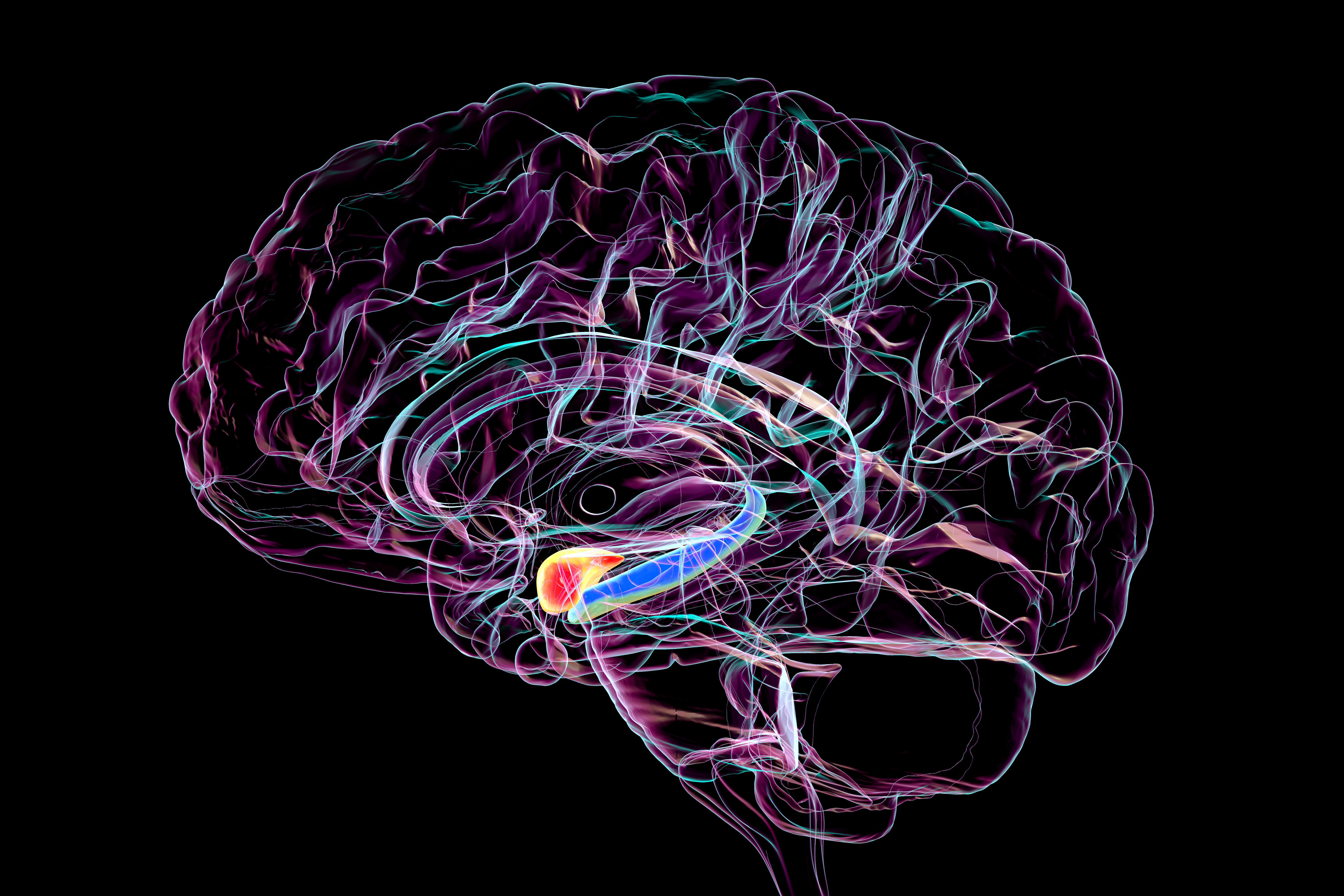
The study investigated patients with drug-resistant epilepsy who were undergoing surgery that included the removal of part of the hippocampus, a brain structure crucial for memory and learning. During a brief 10-15-minute window before the tissue was removed, researchers were able to perform highly detailed recordings using an experimental research device known as a Neuropixels probe.
Neuropixels technology represents one of the most advanced neural recording methods currently available. These silicon-based, hair-thin probes contain densely packed arrays of electrodes and can simultaneously record the activity of hundreds of individual neurons as well as larger neural populations.
Between 2022 and 2024, Dr Domokos Meszéna, lecturer and researcher at the Faculty of Information Technology and Bionics of Pázmány Péter Catholic University, worked as a postdoctoral researcher at the Neurology Department of Massachusetts General Hospital and Harvard Medical School in Boston. There, he was part of one of the pioneering groups implementing Neuropixels technology in human neurosurgical settings. As a co-author of the newly published study, he contributed to the implementation of the recording system and to the preprocessing and analysis of the neural data collected by researchers at the Baylor College of Medicine in Houston, Texas.
Learning Without Consciousness
Most epilepsy surgeries of this kind are performed under propofol anaesthesia. Before the hippocampus was removed, neurosurgeons inserted a Neuropixels probe into the exposed brain tissue, allowing them to record the activity of hundreds of neurons simultaneously with unprecedented resolution.
At first glance, studying higher cognitive functions during deep anaesthesia may seem impossible. After all, the patient is unconscious and unable to perform any behavioural task. The ingenuity of the study lies in the fact that the researchers designed an entirely passive auditory experiment.
Patients first heard a sequence of repeating tones interrupted by occasional deviant sounds, known in neuroscience as “oddball” stimuli. The recordings showed that hippocampal neurons were able not only to detect these unexpected sounds but also to become increasingly sensitive to them over time. In other words, the neural representation of the oddball tones strengthened throughout the experiment, demonstrating a form of learning and representational plasticity even during anaesthesia.
These findings indicate that the anaesthetized brain can still learn statistical regularities from its auditory environment, despite the absence of conscious awareness and despite patients having no memory of the experience after waking up.
The Anaesthetized Brain Can Process Language
The second experiment produced even more remarkable results. Researchers played several minutes of natural speech to patients who remained deeply unconscious throughout the procedure. Using recordings from hippocampal neurons, they examined how the brain responded to different words and to the grammatical and semantic structure of spoken language.
The results showed that some neurons responded more strongly to nouns, while others were more sensitive to action-related verbs or emotionally loaded words. The neural responses were sufficiently informative so that researchers could statistically decode aspects of the meaning and content of the podcast directly from the recorded brain activity.
In other words, the hippocampus was not merely registering sounds. Even under general anaesthesia, it continued to process linguistic information, including semantic and grammatical features of natural speech. Remarkably, some neural signals also contained predictive information about upcoming words before they were actually heard.
Prediction is a hallmark of normal language processing in awake individuals. During conversation, we constantly anticipate how a sentence is likely to continue. Modern large language models operate on a similar principle, predicting future words based on context. What makes this study extraordinary is the demonstration that such predictive processing can persist even when consciousness is absent.
Rethinking the Relationship Between Consciousness and Cognition
The findings challenge a long-standing assumption in neuroscience: that complex language processing, prediction, and other higher cognitive functions necessarily require conscious awareness.
Instead, the study suggests that deep brain structures such as the hippocampus continue to analyse information, learn patterns, and generate predictions even when consciousness is effectively switched off.
Beyond their theoretical and philosophical significance, these results may also have important clinical implications. If similar forms of covert neural processing can be detected in patients who are unable to produce behavioural responses - such as individuals in coma or disorders of consciousness - researchers may gain new tools for assessing preserved cognitive capacities.
In the longer term, such advances could contribute to the development of brain–computer interfaces capable of restoring communication for patients who have lost the ability to speak or move but retain meaningful cognitive function.
The study was conducted at the Baylor College of Medicine under the leadership of Dr Sameer Sheth and Dr Benjamin Hayden. The publication, Plasticity and language in the anaesthetized human hippocampus, is available in Nature. The study was covered by several hundred news sites, including Time Magazine.
We congratulate Dr Domokos Meszéna on his contribution to this groundbreaking international research project and wish him continued success in his scientific career.