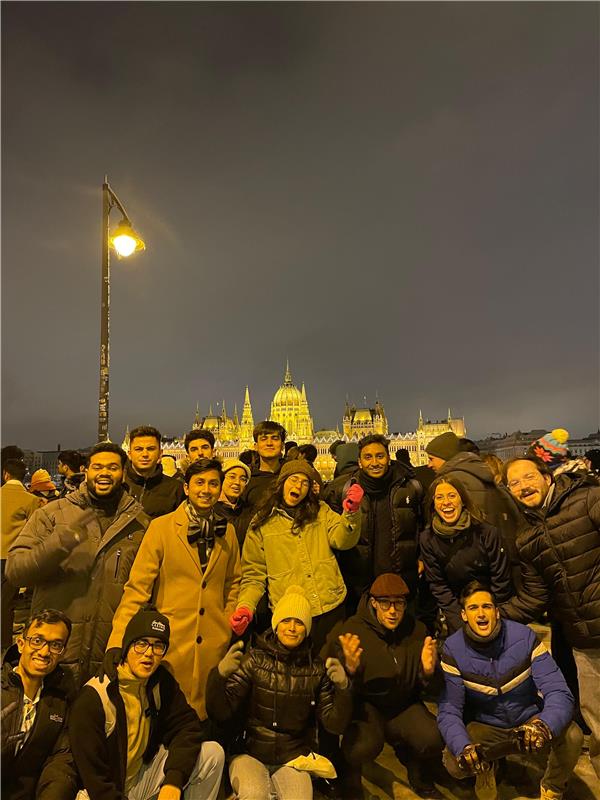
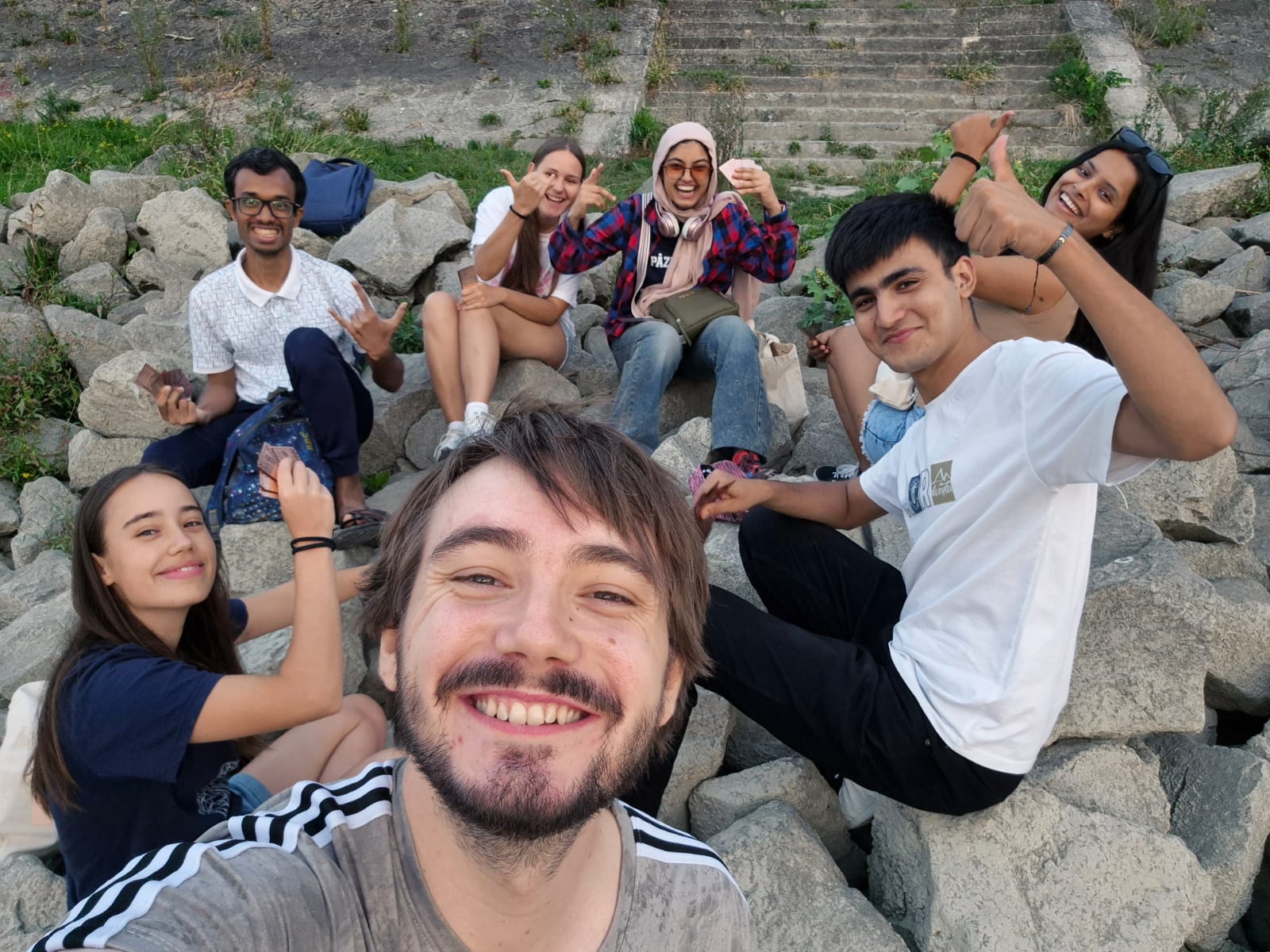
If you had to sum up your first semester in just one word, what would it be?
Paula (Spain): The beginning. This semester really felt like the start of something new: new friends, a new master’s program, a new country, and so many new experiences. I know it's just the beginning; therefore, it comes with adaptation and a lot of learning, but also with excitement.
Oliver (Denmark): Prologue.
Muqsit (Pakistan): Experience. I got to experience so many things for the first time, and while it was very special, it was also a bit overwhelming at times.
Shihab (Bangladesh): Balance. After a long time, I finally managed to find the right balance between my studies, my family, and my social life. Before coming here, I had to work very hard and sacrifice a lot to be where I am now, but those experiences made me capable of handling my responsibilities smoothly. I can finally say I have found a sense of contentment within academia.
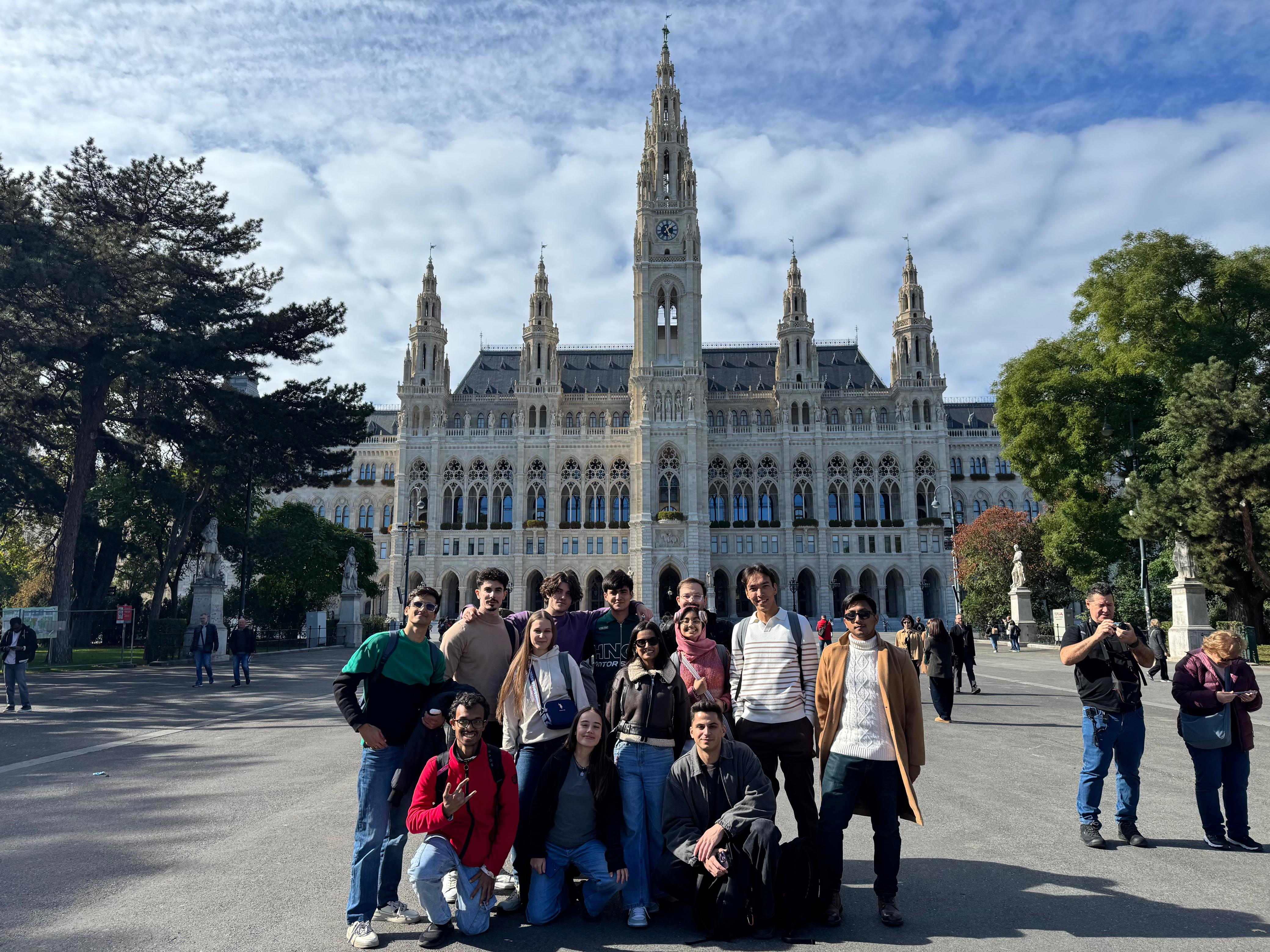
Was there a moment when you suddenly felt: ‘Okay, I really belong here’?
Olena (Ukraine): It was the evenings spent with people from the cohort. Those moments felt very warm and really gave me the sense of living somewhere, not just visiting. Throughout the semester, I slowly realized that we share many common interests, such as music and films. Furthermore, I was happy to find that we also share similar future plans, which is a very different experience from what I have had before.
Oliver: When I first met my fellow students, we kept falling into deep conversations – the kind my friends back home would probably get bored of pretty quickly. With every new introduction, I realized more and more that choosing IPCV had been the right decision.
Paula: In the first few weeks, when I got to know everyone. I remember thinking that everything was going to be okay, that we were all going to take care of each other and have a lot of fun together.
Muqsit: We had a party after the last exam at Olena’s place. That was the most comfortable I had felt with my classmates since arriving.
What was it like studying at Pázmány ITK? What stood out to you the most, academically or personally?
Sneha (Nepal): Everything at Pázmány ITK feels very systematic and student-friendly. I especially liked the oral exams: I think they are a great way to really test your understanding of a subject. I was impressed with this new mode of examination.
Muqsit: The faculty and staff were extremely helpful and kind. The small, close-knit environment was a big cultural shock for me, especially how easy it was to socialize with teachers and supervisors.
Shihab: IPCV is a very strong foundational program. Being part of Pázmány ITK made me feel special and valued: our opinions matter, and we get individual attention, which I really appreciated. You won’t know what you are missing out on unless you try and get in. It’s an experience of a lifetime.
Olena: The atmosphere feels very cozy, and the professors are always supportive and ready to help.
Paula: Pázmány really feels like a family. There’s a strong sense of community. The staff organize events, they care about your opinion, and make changes whenever possible to accommodate your ideas. The same goes for the teachers: they genuinely care.
Oliver: Coming from Denmark, I found the structure - midterms, weekly tests, the number of exams - a bit tedious at first. But it was also interesting to experience a very different system, and it challenged my ideas of what studying should look like. One thing that positively surprised me was how informal and approachable the faculty are. Another huge plus is the access to a student counsellor who is also a licensed psychologist - without having to pay. That’s something every university should have.
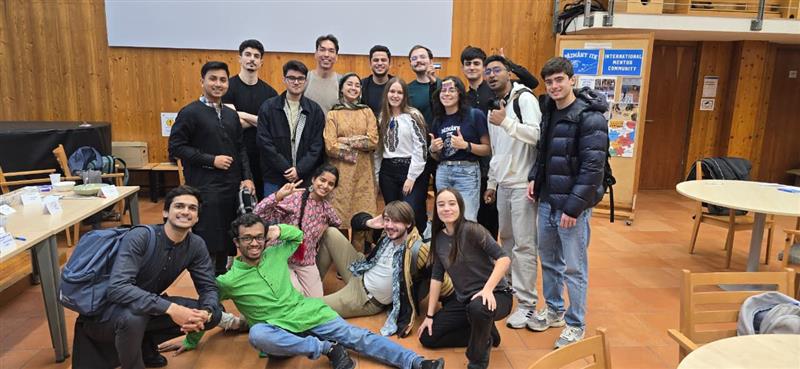
From an academic perspective, which course meant the most to you?
Paula: I’m happy to have a better understanding of the basics needed for Computer Vision and Deep Learning now. Numerical Analysis was challenging but incredibly rewarding: it gave us the base to understand concepts in other subjects. Also, courses like Basic Image Processing Algorithms and Fundamentals and BT for Deep Learning gave me a strong foundation.
Muqsit: I really enjoyed the Deep Learning course, especially because it went into theoretical depth that’s often skipped. It was really nice to get that chronological development context of DL theory.
Oliver: Fundamentals of Deep Learning helped me understand where everything comes from mathematically and why it works. But I think the hidden gem of IPCV is how much you learn from being in an international cohort abroad. Learning is not just academics, but it’s also a personal, emotional and cultural issue. This “hidden learning” is to me the biggest academic reason to do the IPCV program.
Did you have a “this is getting tough” moment during the semester? How did you get through it?
Sneha: I had to travel back to Nepal for a family event and missed the Deep Learning midterm. I was really overwhelmed at first, but Professor Karacs and my IPCV friends helped me catch up and complete everything successfully.
Olena: The hardest time was right before midterms and finals. Watching how my classmates managed the workload helped a lot, and I wasn’t afraid to ask for advice.
Oliver: Probably my near mental breakdown during the end-term tests. I need a lot of time to understand new concepts, so it was intense. I got through it by pushing myself - barely - and I’m still not sure whether becoming more ‘battle-hardened’ is a good thing or not.
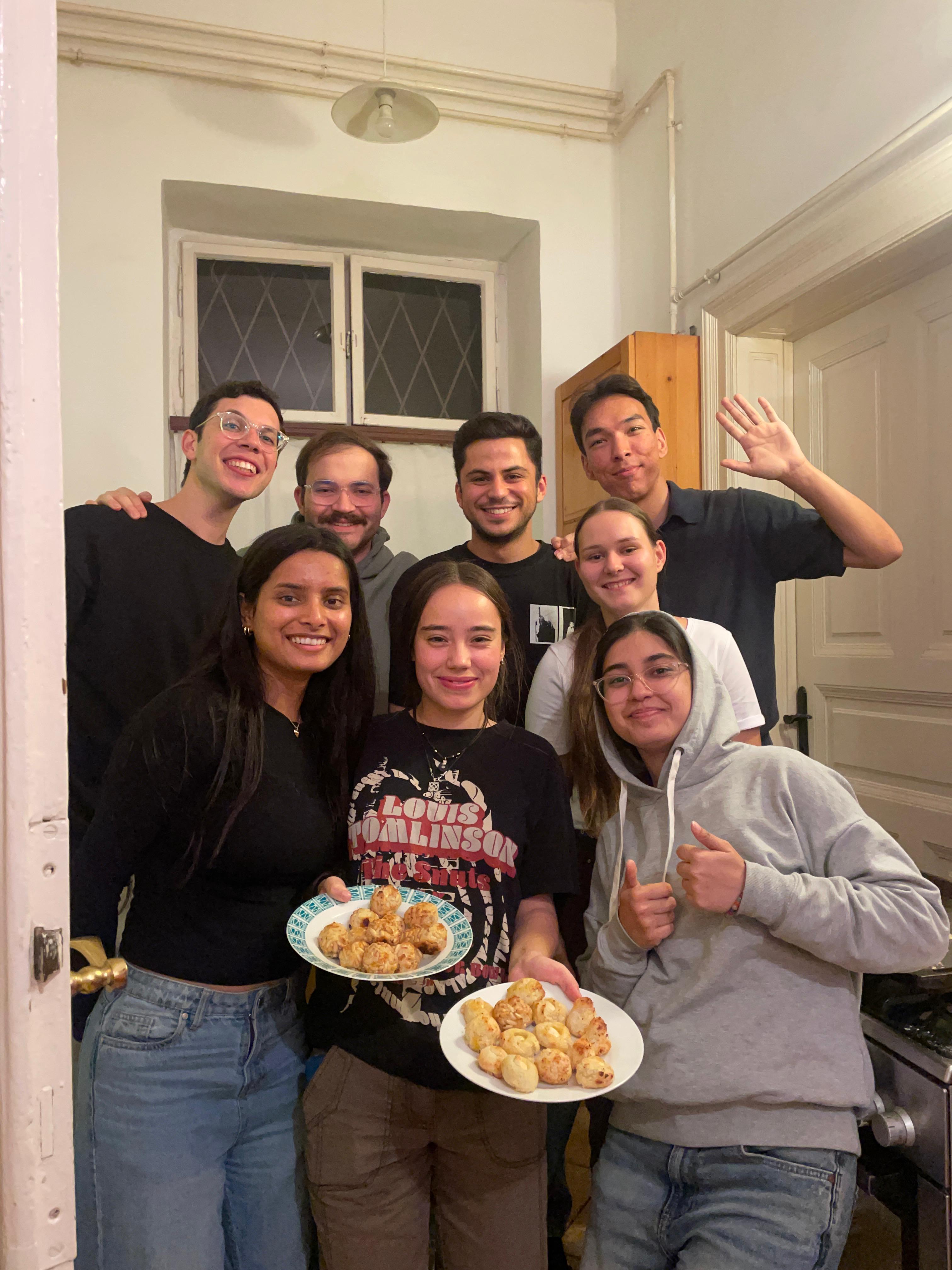
Paula: The last weeks before Christmas were really tough. We had a lot of exams and projects overlapping, and it felt like we didn’t have a second to spare. But because we were all in the same situation, it helped. We studied and worked on our projects together, either at a library or at someone’s house.
Shihab: I decided to finish all my exams in December, which was very demanding. However, I made use of almost all the beautiful libraries Budapest has to offer. Staying in those environments kept me motivated and focused.
Looking back, how do you feel you’ve changed since the beginning of the semester? Is there an experience that really stayed with you?
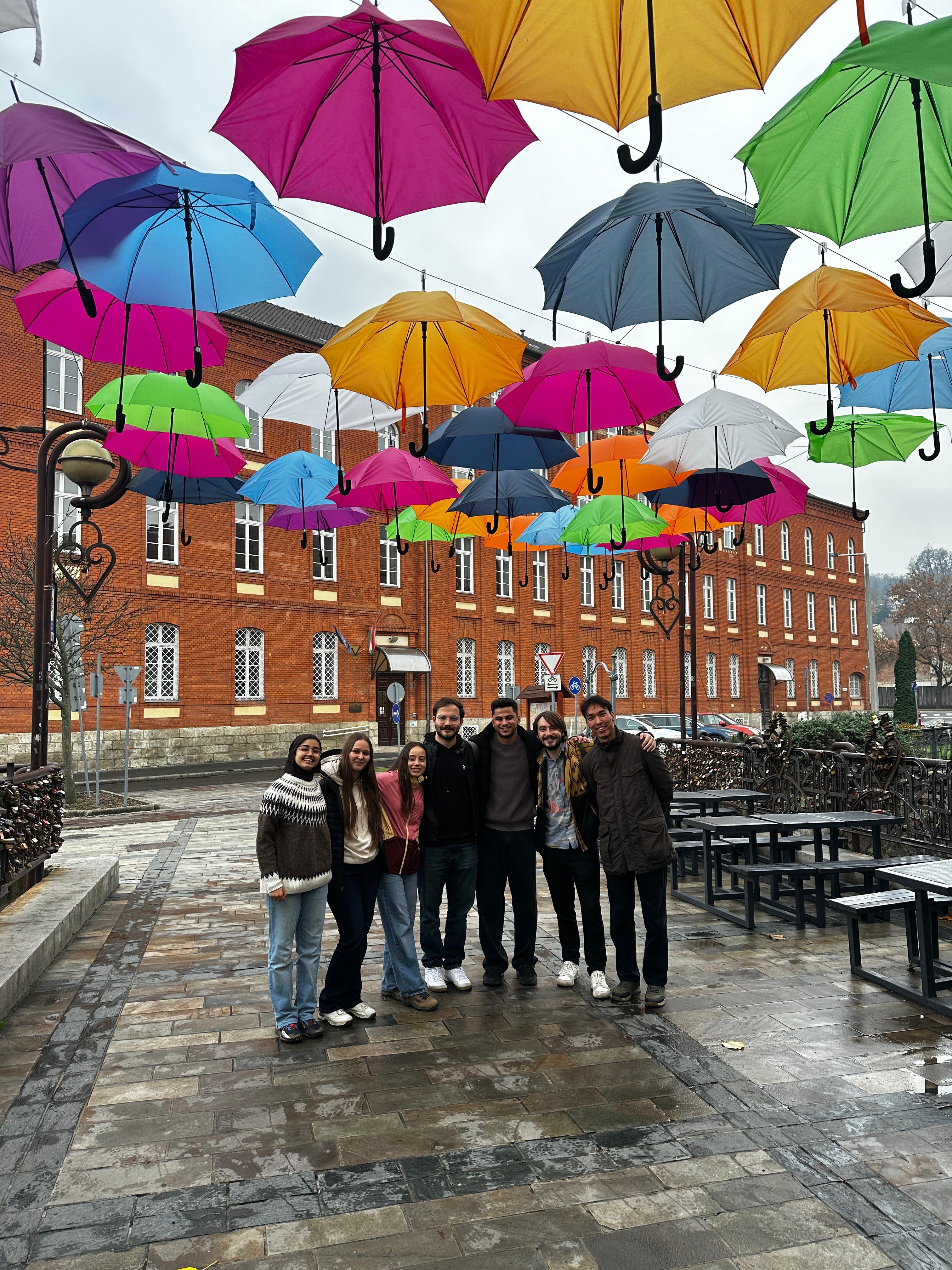
Muqsit: Even though I lived away from home for four years during my bachelors, I was never away for more than a month at a time. This experience has made me much more self-sufficient, and I got better at taking care of myself.
Shihab: I learned how to cook, shop, and live on my own. Although I miss home sometimes, our wholesome cohort makes it difficult to feel lonely. Finishing all my exams in December was extremely difficult, but spending so much time in Budapest’s libraries made the experience meaningful.
Mohsin (India): I’m much more comfortable adapting to multicultural environments and new conditions, including the weather. Living in Budapest allowed me to connect with many wonderful people from diverse national and cultural backgrounds, which has broadened my perspective and made me excited for what comes next. I also feel more capable of handling extended academic and research challenges after completing an enriching semester at Pázmány ITK.
Oliver: Living and studying in another country for the first time was a real rollercoaster and taught me a lot about myself. I’ve become more mature and learned a lot about myself and my future. I’m also much more used to studying - and exams - for better or worse.
Sneha: My knowledge of different countries and cultures has increased significantly. I’ve learned to appreciate the difference in opinion and how to have fun while still studying Deep Learning till 5 AM with my friends. If I could go back and talk to myself a year ago, I would tell myself to be just a bit more confident, because applying to the IPCV program is going to be the best decision of my life.
Paula: I remember taking the first exam. It was an elective, so only a few of us were studying for it, but it turned into a surprisingly fun week. It really showed how a common challenge brings people closer.
How did Hungary and Budapest treat you? Can you mention a small, everyday Budapest moment that made you feel like you were really living here?
Muqsit: People are very helpful, honest, and direct - in a good way. I made very good friends at the place where I played badminton. They really made me feel like home by getting me involved in different activities with them. It was nice to have a community I had found for myself separate from my place of work/study
Sneha: Yeah, Hungarian people are incredibly kind and helpful. Also, the one “hidden gem” of the IPCV program is the fun activities that this program organizes: it’s not just about the rigorous courses.
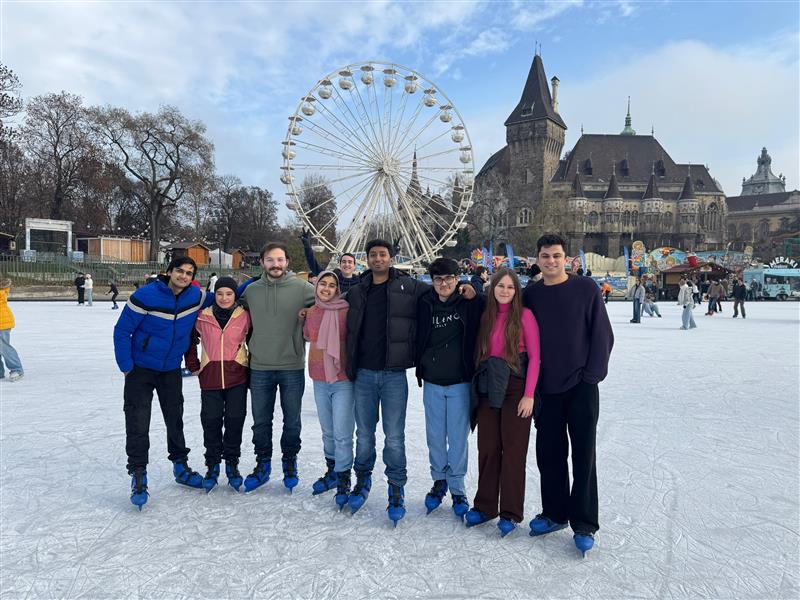
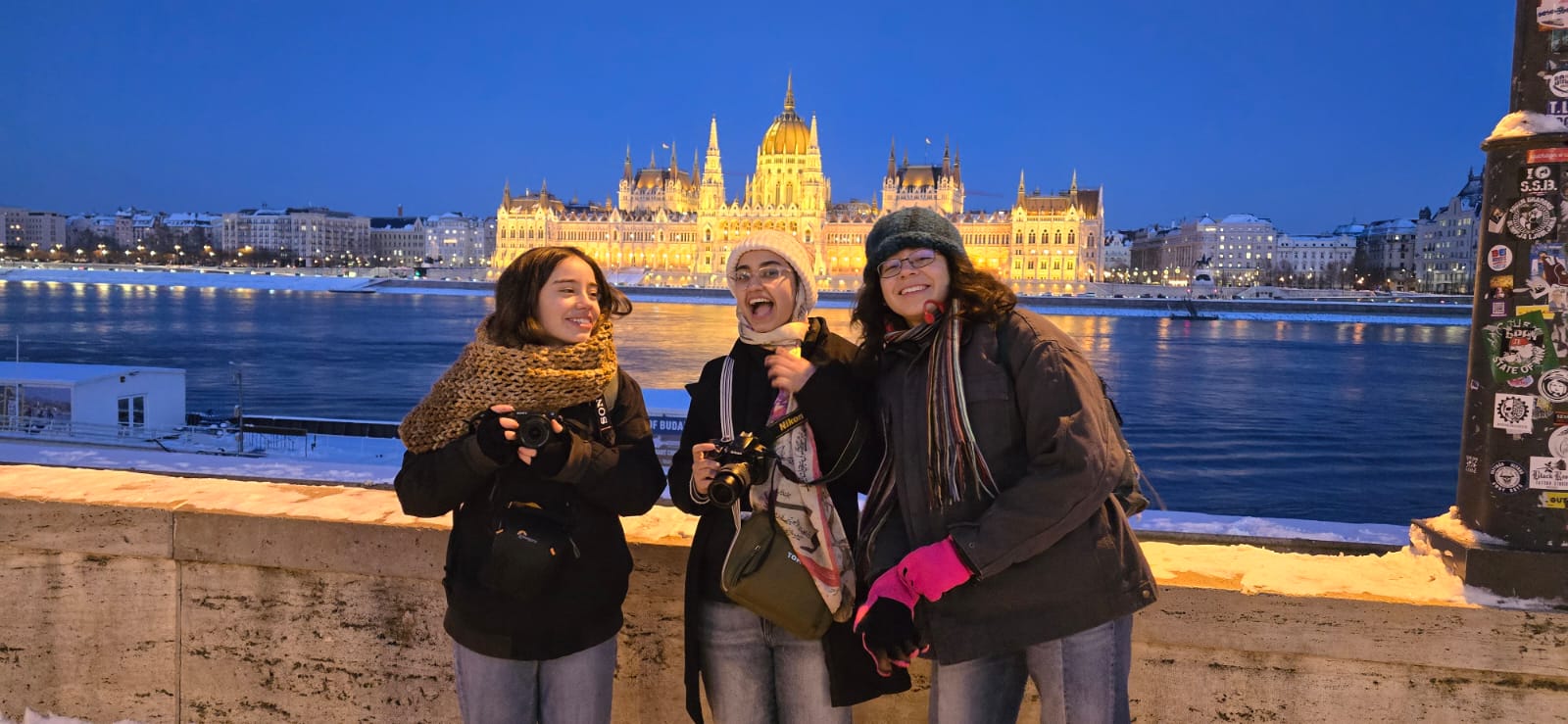
Paula: I didn’t know much about Hungary before coming here, but Budapest has been an amazing home. Budapest is an incredible city, with beautiful buildings and lots of activities to do. Hungarian culture surprised me in a good way, with everyone willing to share their experiences and answer our restless questions. It still amazes me that I can casually walk past the Parliament on an ordinary day. Having a routine that included studying in libraries like the Parliament Library or the Metropolitan Library felt like a dream.
Oliver: It’s been much easier and more fun than I expected. I love the public transport system, and people are generally very friendly. Tourists kept stopping me to ask for directions. As a man with darker hair, and even darker beard, I think people often mistook me for a Hungarian. When I visited my girlfriend in Denmark and then flew back, it felt weird, because it didn’t feel like taking the plane on a trip, but more like going home from a visit to my parents’ house.
Shihab: I’m fascinated by the language, and I think I have learned all the basic words by now. Using a few Hungarian words with locals who don't expect it, their reactions make it truly worth it. I love sunrises and sunsets. Watching them at Fővám tér or near the Parliament always made me feel like I was truly living here
As you’re heading to Madrid next, what are you most excited about?
Paula: I am excited for all the new things to come: new teachers, a new city, and even a new language. Also, it's amazing to know I will be able to experience all of this with my new friends. It definitely feels different than the first days in Budapest, when I didn’t know anyone.
Oliver: I’m curious about how different the next semester will be, academically and personally. Everything will restart, just when I got used to living in Budapest. But this is the thrill of IPCV: a lifelong moment of new challenges and experiences.
Muqsit: I’m really excited to share an apartment with my classmates - and yes, also a bit nervous. I’m also looking forward to more advanced courses in Computer Vision and starting research projects. The campus also looks amazing, full of extra-curricular activities.
Shihab: As a soccer fan, visiting the Real Madrid stadium is definitely on my list.
As the IPCV cohort moves on to the next stage of their journey, we wish all students continued success, curiosity, and many more unforgettable experiences ahead.
Thank you to everyone who shared their stories; and best of luck in Madrid and beyond!