The scientific programme covered a wide range of topics. Presentations included an overview of the historical development of cosmetics, an introduction to anticipated changes in European Union cosmetics regulations, and insights into state-of-the-art quality control and rheological testing methods. Particular attention was given to sustainable and naturally derived cosmetic ingredients, the science behind skin hydration, innovative delivery systems, and modern sun protection solutions.
Among the scientific presentations, the talk by our Faculty researcher, Franciska Erdő, attracted considerable interest. She presented the development of multifunctional hybrid nanofibers designed to accelerate wound healing. The results showed that the new nanofiber systems possess anti-inflammatory, regenerative, and antimicrobial properties, and significantly accelerated the wound-healing process in in vivo studies.
The afternoon sessions focused on sustainable sun protection systems, advanced preservation technologies, the effects of plant oils on the skin barrier, and new possibilities for transdermal active ingredient delivery. The environmental impact of sunscreen products was a particularly timely topic, with research findings related to Lake Balaton and potential future directions for development presented.
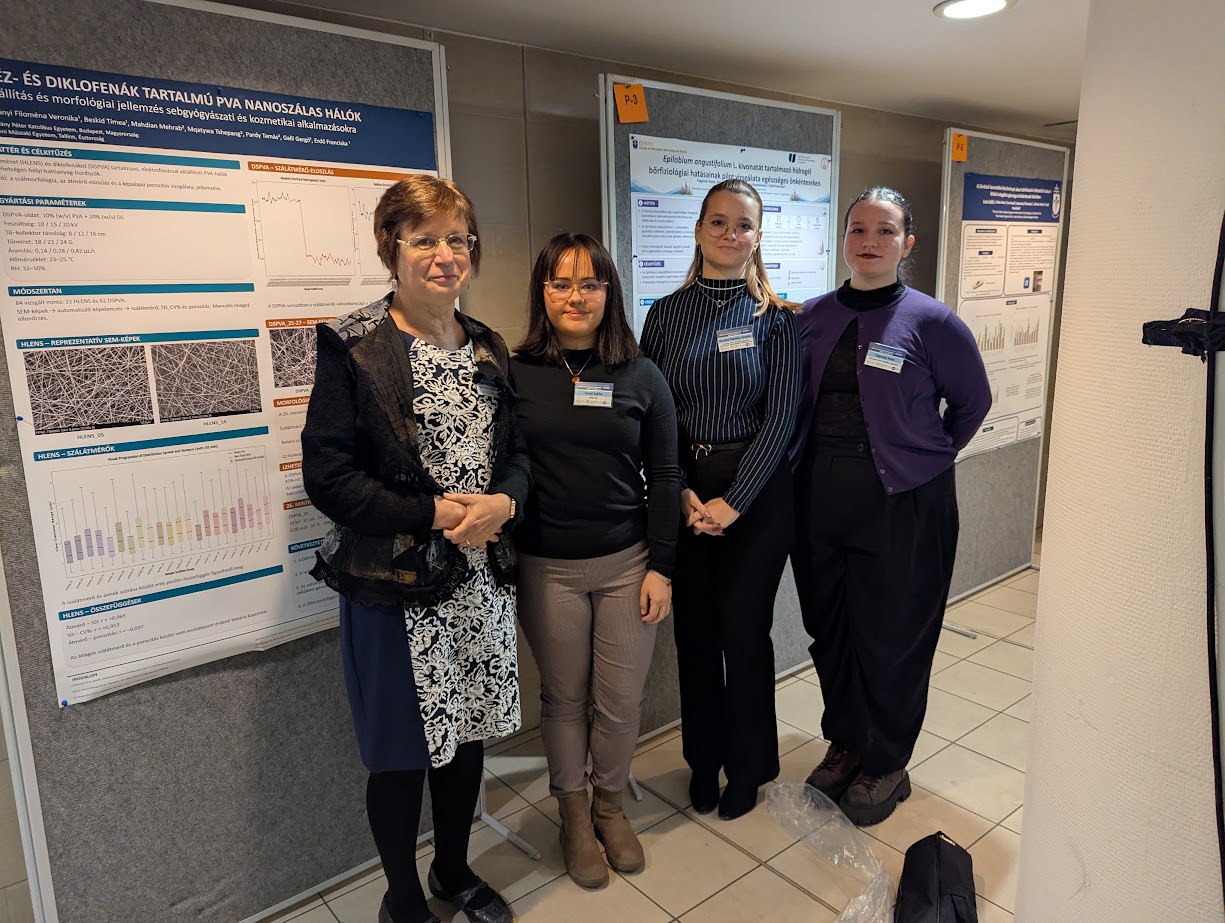
The symposium also featured a poster session showcasing research conducted at various universities and research institutions. Students from Pázmány ITK – Filoména Borsányi, Zsófia Csapi, and Anna Fogarasi – presented their work on several topics, including the evaluation of the moisturizing effects of cosmetic formulations, the assessment of hydrogels containing plant extracts, and the development of nanofiber systems for wound healing applications. Their findings highlighted the growing importance of objective, instrumental methods for evaluating the efficacy of cosmetic products.
The event successfully strengthened cooperation between academic researchers, industrial developers, and professionals in the cosmetics sector. The presentations and posters demonstrated how contemporary cosmetic science increasingly draws on advanced materials science, biotechnology, and environmental research, while placing strong emphasis on sustainability, safety, and consumer needs.