From September 13 to 17, 2026, I attended the IEEE International Conference on Image Processing (ICIP 2026) and its associated workshops in Tampere. On the third day of the conference, I gave a talk presenting our accepted paper, SceneVGGT: VGGT-based online 3D semantic SLAM for indoor scene understanding and navigation. Taking part in this international conference, which had more than 1,200 participants, was a defining experience for me, both professionally and personally.
The full-day workshop program on the Sunday before the conference gave me insight into the latest results in topics related to my own research. After registering, I joined the 3D Volumetric Video Processing and Compression Workshop. The talks I attended there included Compact Gaussian Representations for Volumetric Video: From Static Scenes to Dynamic Avatars, which reviewed how Gaussian-based representations are applied, from static scenes all the way to dynamic avatars. I also attended Capture-to-Render: Robust 3D Gaussian Splatting from Mobile RGBD, which addressed robust 3D reconstruction from data captured on mobile devices. In the morning, I also heard an application-oriented talk, Camouflaged Garden Eel Detection and Burrow Mapping, which tackled challenges like those in our own project carried out in cooperation with the Max Planck Institute. In addition to the workshop on Gaussian representations, I took part in the Workshop on Professional Skills, where a lecture and an interactive exercise focused on effective presentation techniques. In the afternoon, the Micro Mentoring Experience Program (MiME) gave me the chance to build connections in two ways. I met fellow participants in a small group, and I also met a lead developer at Intel who served as our group's conference mentor on behalf of IEEE.
During the main conference days, many talks ran in parallel across several rooms, so I carefully selected those most relevant to my research. These included industry talks, such as NVIDIA's keynote, which showed where the field is heading in industrial applications. During the coffee breaks between talks and in the afternoons, I visited the poster sessions. There I talked directly with authors about their methods, results, and practical experience, as well as possible future collaboration. I presented my talk on Wednesday afternoon at the Special Session on Embodied Image Processing. Several members of the audience asked questions afterwards, and we continued the discussion informally during the break following the session.
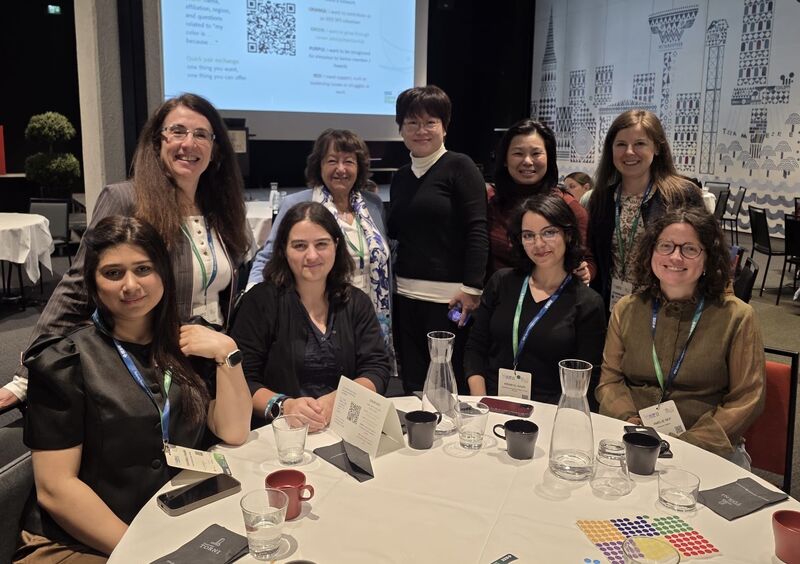
I met many researchers from abroad during breaks, sometimes over lunch, and at the events held in the late afternoons and evenings after the talks. These events included the Welcome Reception, the IEEE SPS Event for Young Professionals, the IEEE SPS Women in Signal Processing Luncheon, the Conference Gala, and the Farewell Party. Among the people I met were colleagues from the Technical University of Munich (TUM), ETH Zurich, and Bonn-Rhein-Sieg University of Applied Sciences. Participants came from all over the world, and I also spoke with researchers from Iran, Turkey, and Morocco. These conversations brought fresh perspectives to my own work and may lead to future professional collaboration.
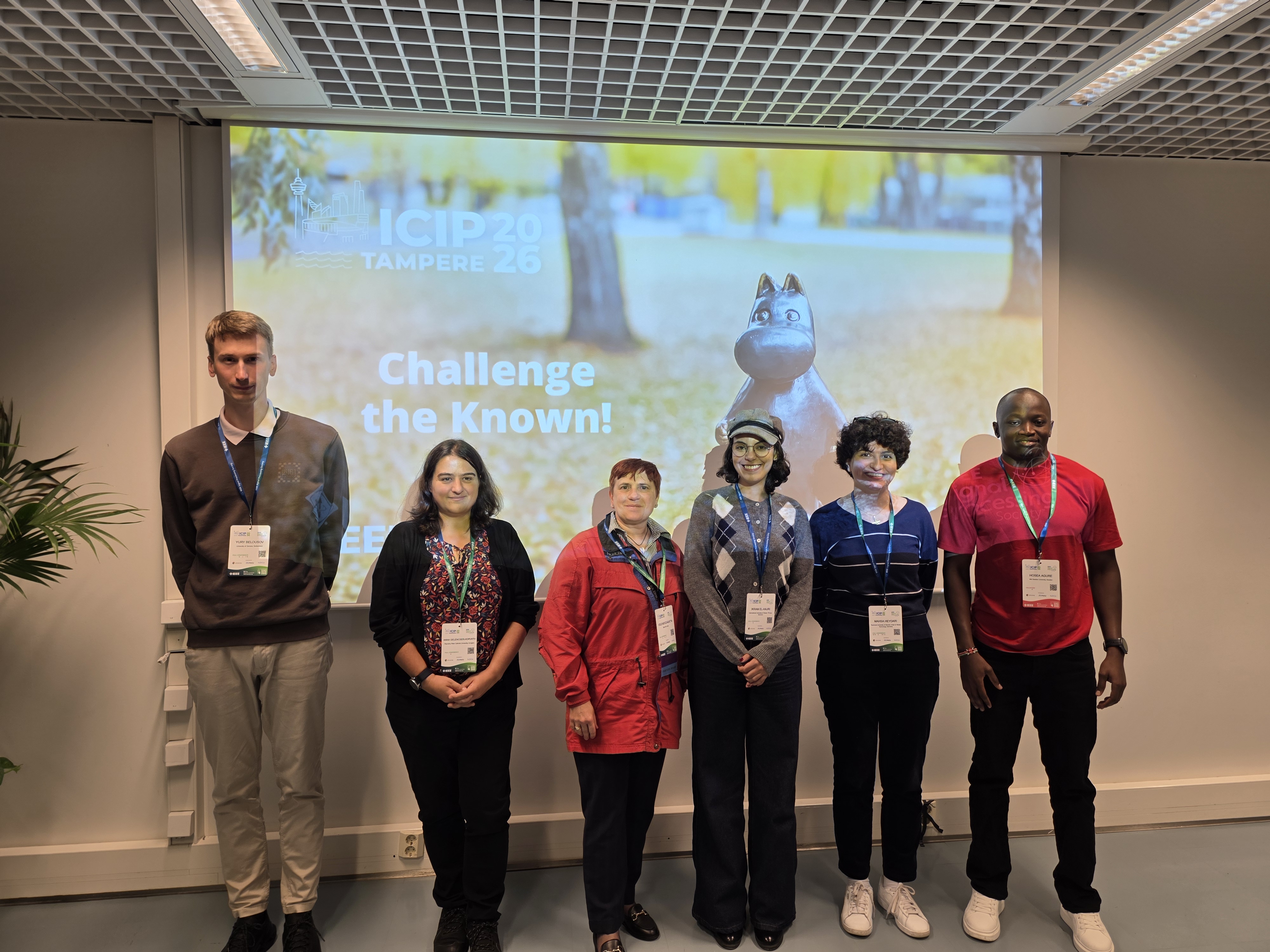
After the conference closed, on Thursday, September 17, I attended another full day of workshops at Tampere University. Of these, Learning Beyond Deep Learning was the most interesting for me. Afterwards, I spent the afternoon and evening with three young researchers I had met at the conference, sightseeing, having dinner together, and talking.
I am grateful to the Info-Bionics Association (IBE), the association working in support of the Faculty, for making it possible for me to attend the conference and present our accepted paper.